
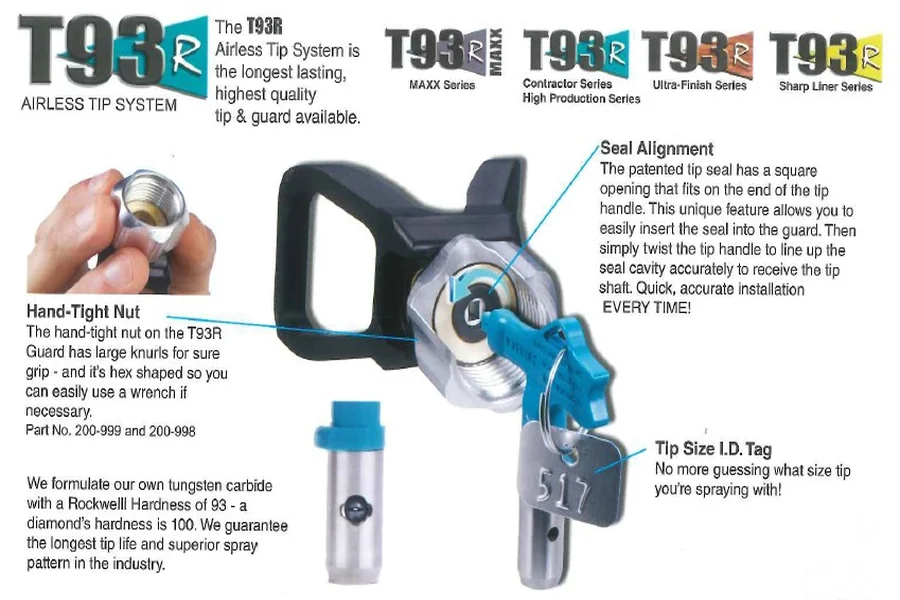
The selection of equipment is what makes the difference between the professional glass-like look and DIY nightmare. At the moment when you stand in the paint aisle, or on the Internet the amount of the tips of airless paint sprayer can be deafening. These small parts are the brain of your sprayer and it regulates the amount of paint that is flowing in the width of the spray and the quality of the finish. The article is addressed to a US audience that wants to master their next domestic or professional contract.
Learning about the Tip Numbering System
When you pull out a spray tip you will see there is a three-digit number such as 517 or 311 on the face of the spray tip. This is not just a serial number it is an accurate performance code. The fan width is indicated by the first figure. The width of the spray pattern at the final distance of 12 inches of the gun is obtained by multiplying that initial value by two. 10-inch fan is made by a tip of 517. The two last numbers are the orifice size expressed in thousands of inch. A 517 has a .017-inch opening. Making use of this code will enable you to make your tool suit your particular needs based on the needs of your project be it you are applying some paint to a small chair leg or one of the giant garage doors.
Correlating Viscosity of Material to Tip Size
Various liquids are of varying thicknesses and your tip should be in a position to sustain that weight without becoming clogged. Lacquers or wood stains are made of thin material and have smaller orifices typically ranging between.011 and.013. Attempting to use that big tip on small stain will bring up huge runs and product wastage. The heavy architectural coatings such as exterior latex or primers on the other hand require openings of.015 or.017. Thick industrial work or elastomeric masonry paint might require up to.021 or.025. When purchasing pure paint always look at the label of the paint manufacturer on the back of the can because most high-quality US brands will tell the specified tip size right in the instructions on the can.
The Significance of Width of fans in its efficiency
The orifice size regulates your flow whereas the width of your fan regulates your speed and precision. When painting a wide exterior wall or a ceiling that you wish to paint wide such as 515 or 615 so that you can cover more area with less cross surface. Nevertheless when painting trim shutters or fences pickets with wide fans will consume a lot of paint as a result of over-sprays. In such instances you would wish to have 211 or 311 tip respectively offering you 4-inch or 6-inch fan respectively. Choosing the fan width causes the paint to remain on the surface and off the air to save you money spend on materials.
How and When to Replace Your Spray Tips
Spray tips are wear items. Once the paint is subjected to high pressure pushing it out the orifice the sandpaper-like solids in the paint gradually enlarge the hole. This is referred to as tip blow out. The loss of its fan shape to a more of a round blob will begin to happen to a worn tip resulting in an unequal coverage and excess spray. Most DIYers and contractors in the US would consider a good guideline to change the tip after their 40-60 gallons of paint. Meanwhile, when you find yourself painting more paint than normal or the lines of your spray can are getting fringey or streaky, then it is time to change the tip.
Maintenance and Safety in Long Life
An airless sprayer is also associated with high pressure that is potentially dangerous when used carelessly. This should be used with the trigger lock and tip guard when the sprayer is not used. To maintain your tips in optimal condition you must not try to remove a clog with a metal wire or needle as this will tend to scratch the carefully manufactured orifice. Most contemporary tips are rather reversible. It is as easy as turning the handle 180 degrees and blowing the clog out of it by pulling the trigger and returning it to the spray position. By putting your tips in a special cleaning solution or “tip jar” they will not dry up in the little crevice and you will be ready to do your next job.
Essentials Trouble-shooting Spray Patterns
Also, with the right tip you may find that you are experiencing problems such as tails, which are solid lines at the bottom and the top of your spray pattern. This normally occurs due to pressure being too low to the size of the tip you have used. The next time you decide to use a new tip make sure to apply more pressure to your pump until you are left without tails. In case you are bouncing back too much or getting too misty you may be running too high on the pressure or your tip may be too small to be running as fast as you are. It is the trick of locating the sweet spot between tip size and pressure setting which makes the difference between professional finish and amateur finish.
Pressure and Hypotension Tips
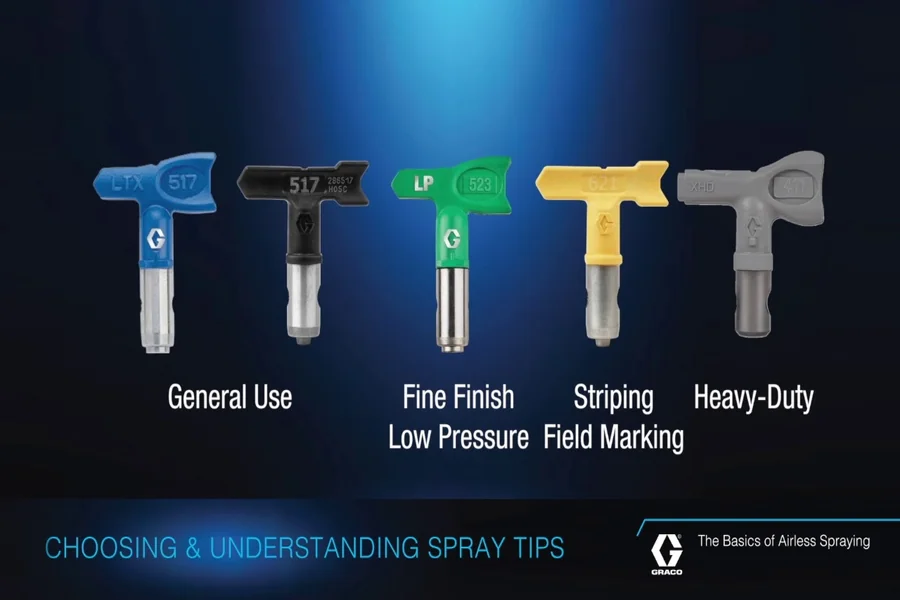
Over the past few years there has been a new proliferation of the types of fine finish low pressure (FFLP) tips in the US market. They are usually green as opposed to the normal blue or hardware-store-brand tips. These hi-tech tips can be sprayed at a pressure that is at least 50% less and still provide an ideal fan pattern. The advantages are immense: less overspray is more easily controlled and the life of the tip and the pump in your sprayer is increased many times. They are a little higher but the elite choice of cabinets door and premium trim work where a smooth finish is required.
Frequently Asked Questions
Is it possible to have my sprayer with any brand of tip?
The vast majority of spray guns are fitted with a standard housing but there are brand specific guards such as Graco and Titan. Although the tips may appear similar, it is better to align the tip brand to the guard one to have a leak proof seal.
What should one remember best to paint kitchen cabinets?
Where cabinets: desire fine finishing. The best choice will be a 310 or 312 FFLP tip. It gives a 6 inch fan that is easy to handle on the cabinet face or the smaller hole assures it a thin uniform coat that lacks drips.
What makes me know that my tip is clogged?
Should the trigger be pulled, and nothing be discharged, or the spray be thrown off at a strange angle, or in a thick stream, then there is a probable clog. Turn the tip upside down and blow it into a garbage can to get the debris out of it.
Is more paint used in a large tip?
Yes. The bigger the orifice the more gallons per minute are able to pass through the gun. When you move at the same rate with a larger tip you will put a much thicker coating of paint on it that may cause sagging.
What is the meaning of the color of the tip handle?
Color coding in professional lines is used to determine the use case in many cases. Usually the yellow is used on roads or striping is used on green and low pressure blue is used on normal architectural painting and gray or black is used on heavy-duty high-pressure.
Final Thought
The best thing to bring your painting to the next level is to master airless paint sprayer tips, because of their speed. When you pair the three digits code with your particular project and material, you make sure efficiency and high aesthetic quality. Wear: be sure to check your tip, and clean it thoroughly to extract the best out of the investment. A few pieces of information about these little details will cost you hours of misery and gallons of unused paint when working on your next American house job.
more articles: Yellow Paint Room Best Ideas for Your Space